Headphones are among the most familiar Bluetooth® products. Whether listening to music on a phone or joining a call on a laptop, people expect them to connect and function. Delivering that familiar experience while introducing new audio capabilities requires designing headphones to work across different generations of devices.
Bluetooth Classic Audio has long provided wireless connections for music and calls. The newer Bluetooth LE Audio delivers audio over Bluetooth Low Energy (LE), enabling more efficient transmission and new listening features—but it requires support on both the headphones and the source device. By supporting both Classic Audio and LE Audio, manufacturers can offer those advances while maintaining compatibility with devices that still rely on Classic Audio.
For engineers, the challenge is delivering that flexibility within tight battery and space limits. Headphones, earbuds, hearing aids, and other compact audio devices need to balance compatibility, power consumption, and functionality—making the choice of chip and audio software an important early design decision.
Understanding Classic Audio and LE Audio
Bluetooth Classic Audio and LE Audio use different radio technologies and audio specifications. Classic Audio operates over Bluetooth Classic, also called BR/EDR. Its established profiles include the Advanced Audio Distribution Profile (A2DP) for music and the Hands-Free Profile (HFP) for calls.
LE Audio operates over Bluetooth Low Energy (BLE). BLE has long supported functions such as sensor data transfer and device control; LE Audio adds a standardized audio architecture. A device that supports BLE does not automatically support LE Audio.
The same distinction applies to dual-mode Bluetooth. The term indicates support for both Bluetooth Classic and BLE. Delivering both Classic Audio and LE Audio also requires the appropriate audio profiles, codecs, and software. Radio support is the starting point for evaluating an audio design.
What LE Audio Adds
LE Audio introduces the Low Complexity Communications Codec (LC3), which supports high-quality sound at low bit rates. It gives designers additional flexibility to balance sound quality, power consumption, and battery size. The battery-life benefit in a finished product depends on the complete implementation, including processing, radio activity, and other features.
LE Audio also supports multiple synchronized audio streams and provides the foundation for Auracast™ broadcast audio. Auracast allows a source to deliver audio to multiple compatible receivers, creating opportunities for shared listening and assistive audio. These capabilities give manufacturers new ways to differentiate products beyond basic wireless playback.
Why Classic Audio Still Matters
New audio capabilities do not replace the phones, laptops, televisions, and other sources customers already use. When a source relies on Classic Audio, headphones need compatible Classic Audio support to receive its music or calls.
Manufacturers address this by defining the devices, operating systems, and audio functions their products will support, then testing representative combinations. A product designed for both Classic Audio and LE Audio can serve those established connections while offering LE Audio features when the connected equipment supports them.
This flexibility has a commercial benefit: manufacturers can introduce new listening experiences without making every customer upgrade the rest of their equipment first. Compatibility becomes part of the product’s appeal and the range of customers it can serve.
Audio Opportunities Across Four Markets
The need to balance audio compatibility and power efficiency extends across four markets: personal consumer devices, medical devices, industrial edge devices, and smart home and building devices. Within each, the value of supporting Classic Audio and LE Audio depends on the listening experience and the equipment the product must connect to.
Personal Consumer Devices
Headphones, earbuds, and audio-enabled wearables bring the compatibility question into everyday use. A customer may listen on a phone, take calls on a computer, and connect to a television. Supporting the required audio technologies across those uses helps manufacturers deliver a more consistent experience.
For products such as smart glasses and audio-capable smartwatches, wireless audio must also share a small battery with displays, sensing, and local processing. Connectivity choices therefore need to be evaluated alongside the other functions that make the product useful.
Medical Devices
Hearing aids and assistive listening devices make power efficiency especially important because battery space is limited. LE Audio provides standardized support for hearing aids, while Auracast enables reception of broadcasts from compatible televisions or from equipped public venues.
Classic Audio support may also be valuable when a product must connect to sources that require it. The right combination depends on the intended users and source devices; hearing aids do not all follow the same connectivity architecture.
Industrial Edge Devices
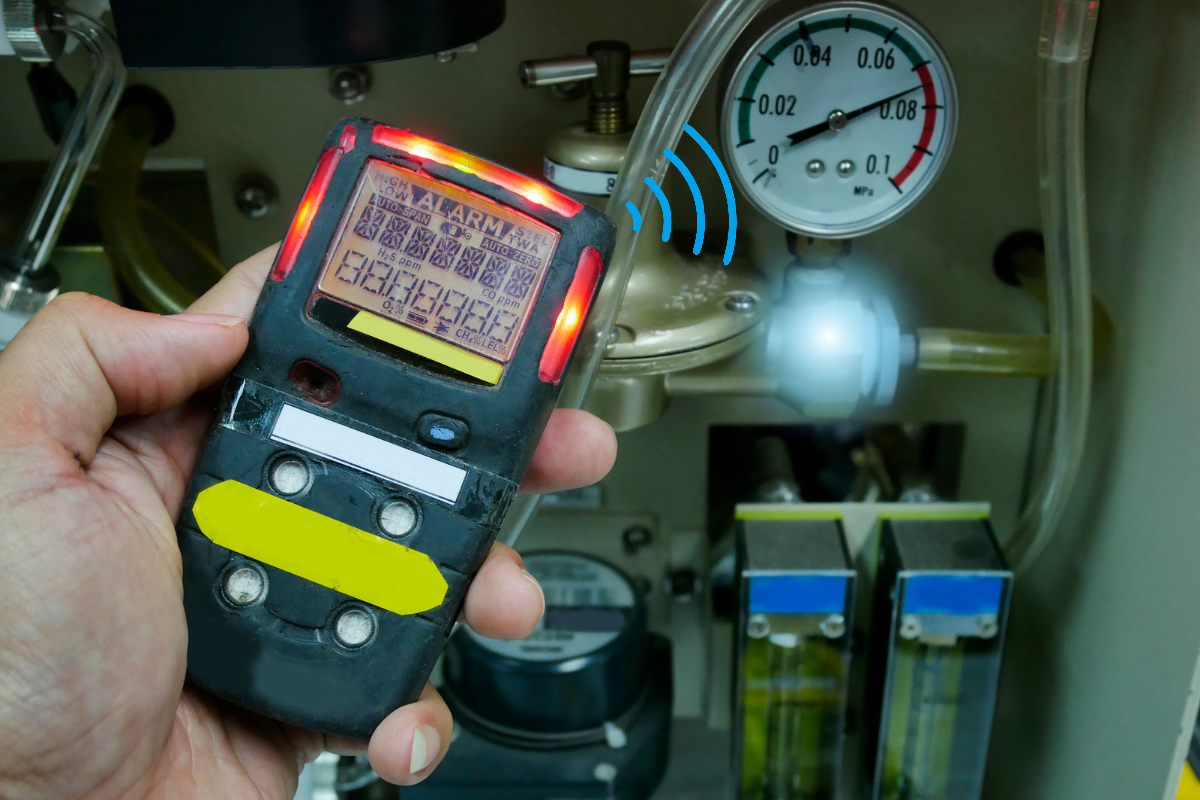
For industrial edge devices with audio functions, potential applications include communication headsets and voice-enabled wearable terminals. A design may need to connect to existing equipment that uses Classic Audio while adding LE Audio capabilities for compatible systems. Teams should identify the required source devices and audio roles before deciding which technologies to support.
In these environments, engineers also need to evaluate speech clarity, end-to-end latency, radio reliability, and operating time across a work shift. Where local AI supports functions such as voice commands, processing and wireless audio must fit within the same system power budget. Supporting both audio technologies is useful when those specific connectivity requirements justify it.
Smart Home and Building Devices
Audio-enabled smart home and building devices can bring shared listening to televisions, home audio systems, and equipped communal spaces. For example, a compatible Auracast transmitter can make a television’s audio available to multiple compatible headphones or hearing aids. Each listener needs the appropriate receiving capabilities, and access may depend on the broadcast’s settings.
When a product must also send audio to headphones that require Classic Audio, designers need to evaluate support for both audio technologies and the software needed for each role. This audio requirement is separate from BLE device control or Bluetooth mesh networking for lighting and sensors. The application determines whether Classic Audio, LE Audio, or both add value.
Why the Chip and Software Matter
Supporting more audio capabilities can increase demands on memory, processing, firmware, and testing. For a compact battery-powered product, those requirements need to be considered before board layout and power budgets are fixed.
A system-on-chip (SoC) that integrates Bluetooth Classic and BLE can reduce the need for separate radio components and help simplify board design. That integration can save space and reduce hardware complexity, while the software stack determines which audio functions the finished product can deliver.
For devices that also perform local AI tasks, such as voice activation or sound classification, audio processing and wireless communication share the overall energy budget. Teams should measure power under representative workloads, including playback, calls, standby, and any concurrent inference. An efficient processor helps preserve energy for additional functionality or longer operation between charges.
Ambiq Options for Connected Audio Designs
Ambiq’s Apollo510D Lite and Apollo330M Plus integrate Bluetooth Classic and Bluetooth Low Energy 5.4 and feature an Arm® Cortex®-M55 processor with Helium™ technology. Both include a network coprocessor and are built on Ambiq’s Subthreshold Power Optimized Technology (SPOT®) platform for ultra-low-power operation.
This combination provides product teams with an integrated platform for evaluating designs that require wireless connectivity and local processing. Selection should account for the exact audio profiles, codecs, source or receiver roles, and software support required by the application, as well as memory, interfaces, and measured system power.
For Ambiq, these requirements create opportunities for audio-enabled products across personal consumer devices, medical devices, industrial edge devices, and smart home and building devices. The value comes from helping manufacturers fit useful capabilities into practical power and space budgets.
Plan Compatibility Early
Start with the listening experience and the equipment the product must work with. Before selecting a platform, establish:
- The source devices and operating systems the product will support.
- The required Classic Audio and LE Audio functions, including calls, playback, or broadcast reception.
- The profiles, codecs, and software available for those functions.
- Power, memory, and latency requirements under realistic operating conditions.
- Interoperability testing and qualification requirements for the finished product.
Making these choices early helps teams build products that work with existing equipment and deliver new audio capabilities as compatible sources become available.
Explore the Apollo510 Lite Series and Apollo330 Plus Series specifications and development resources, and discuss your audio requirements with Ambiq to identify the right starting point for your design.
Frequently Asked Questions (FAQs)
What is Dual-mode Bluetooth?
Dual-mode Bluetooth means a single device supports both Bluetooth Classic (BR/EDR) and Bluetooth Low Energy (BLE). Classic carries continuous audio streaming and hands-free calling, while BLE handles low-power, always-on tasks like sensor reporting, firmware updates, and newer audio features such as LE Audio. A dual-mode device can use whichever protocol suits the job and connect to a wider range of hardware.
Why do devices still need Bluetooth Classic if BLE is newer?
Bluetooth Classic has shipped in consumer, medical, industrial, and building products for well over a decade, and much of that hardware is still in daily use. Cars, printers, hospital equipment, and many headsets and speakers rely on Classic profiles like A2DP for music and HFP for calls, and their replacement cycles run for years. A BLE-only device can’t connect to that installed base, so any product that needs to work with existing accessories needs Classic support alongside BLE.
Can one chip support both Bluetooth Classic and Bluetooth Low Energy?
Yes. Ambiq’s Apollo510D Lite and Apollo330M Plus each support BLE 5.4 and Bluetooth Classic, including A2DP and HFP audio, on a single SoC. A dedicated Cortex-M4F radio subsystem runs the wireless stack, so product teams don’t need a second radio chip, a second power rail, or additional board space to support both protocols.
What is Auracast, and why does it matter for hearing aids?
Auracast is a broadcast audio capability built on Bluetooth LE Audio that uses the LC3 codec. It lets a transmitter in an airport, theater, or lecture hall stream audio to any compatible receiver nearby without a one-to-one pairing step. For hearing aid manufacturers, that makes Auracast support an increasingly important feature for next-generation devices. Adoption in public venues is still early, but the Apollo510 Lite and Apollo330 Plus Series both include Auracast support in their BLE feature set.
Does the Apollo330M Plus support Thread and Matter?
The Apollo330M Plus is designed to support IEEE 802.15.4, Thread, and Matter, and Ambiq lists that support as planned for a future over-the-air update. That makes it a fit for smart home and building products that need mesh networking alongside dual-mode Bluetooth audio and pairing. The Apollo510 Lite Series does not include 802.15.4 support.
When should a product team plan for dual-mode Bluetooth?
Early, ideally before board layout and power budgets are locked in. A product that launches as BLE-only often needs Classic support two or three years later, when a partnership, a retail channel, or a customer segment requires it. Designing around a dual-mode SoC from the start costs far less than retrofitting a board that was never built to carry a second radio, even if the first version ships with only BLE active.
Which MCU is best for Bluetooth-connected edge AI devices?
The best choice runs machine learning inference efficiently, supports the Bluetooth protocols the product needs, and stays within a battery-powered power budget. In practice, that increasingly points to an SoC rather than a standalone MCU paired with a separate radio chip, because integrating the radio, AI compute, and security on one die avoids a second component, a second power rail, and a second round of firmware and certification work.
That integrated approach is how Ambiq builds its Apollo family. The Apollo510D Lite and Apollo330M Plus each combine an Arm® Cortex®-M55 processor with Helium™ technology, a dedicated Cortex-M4F radio subsystem, Bluetooth Low Energy 5.4 and Bluetooth Classic, and secureSPOT® 3.0 security on a single SoC built on Ambiq’s SPOT® platform. Because the radio runs on its own coprocessor, Bluetooth communication, sensing, and inference can run at the same time without competing for resources. Compared with competing Cortex-M4 and Cortex-M33 based solutions, Ambiq reports more than 16x higher performance and up to 30x greater AI energy efficiency for both the Apollo330 Plus and Apollo510 Lite Series.
What are the best Bluetooth Low Energy SoCs for edge AI?
The best Bluetooth Low Energy SoCs pair a low-power radio with enough on-chip compute to run inference locally, so a device can act on sensor data without waking a phone or reaching the cloud. Ambiq offers four options across the Apollo510 Lite and Apollo330 Plus Series, all built around the Cortex-M55 processor with Helium technology.
Every Bluetooth-enabled variant supports up to +13 dBm transmit power and receive sensitivity down to -104 dBm at 125 kbps. Teams building BLE-only products can choose the “B” variants, while teams that also need to work with Classic-only accessories can choose the “D” or “M” variants without adding a second radio chip.