Ambiq Featured Blog posts

Using AI in Nursing Homes for a Better Retirement
As you or your loved ones become older, questions about retirement will emerge: What kind of care will my loved ones or I receive, or where will we go? For many families, nursing homes are a solution. With over 1.4 million people living in nursing homes1, more and more seniors are exploring their options for

Charlene Wan
Ambiq Latest Blog posts

How AI-Powered Smart Glasses Are Redefining Wearable Experiences
Smart glasses have long promised to disrupt the consumer market. Despite the initial hype, innovations remained limited to enterprise use as opposed to consumer everyday wear. When consumer devices started coming out, they were often very bulky for...

Understanding Brain Health through Brain-Computer Interface (BCI) Technology
The human brain is incredibly complex, with an estimated 86 billion neurons forming over 100 trillion connections, according to Harvard Medical School. For decades, decoding the brain and the data collected from it was left to neuroscientists and...

4 Steps to Choose an Energy-Efficient Semiconductor for Wearables
Selecting energy-efficient semiconductors for wearables is crucial for enhancing device performance and battery life. Low power consumption, size, processing power, and connectivity are essential criteria that manufacturers must consider. By...
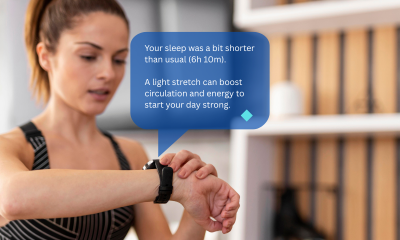
AI Personal Health Coaches – Counting Steps Is Only the Start
Image by Freepik Not that long ago in human history, the idea of counting steps was mainly used for very rough estimates of distance or perhaps old-timey duels with pistols at sunset. Today, counting steps for health is common, and everyone...

Subthreshold Operation: Engineering the Future of Ultra-Low-Power Semiconductors
What if the biggest breakthrough in semiconductor power efficiency came from operating transistors below their normal limits? That’s exactly what Ambiq achieved with SPOT® (Subthreshold Power Optimized...
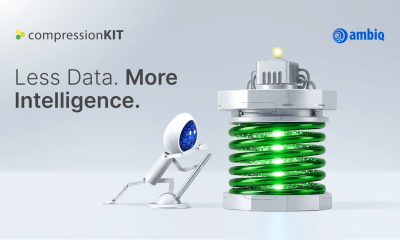
Solving the Memory Challenge of Always-on Edge AI with compressionKIT
Inference gets the attention, but continuous sensor data drives memory, bandwidth, and power constraints. compressionKIT™ reduces data at the source—enabling more efficient, scalable edge AI systems The past few years of edge...
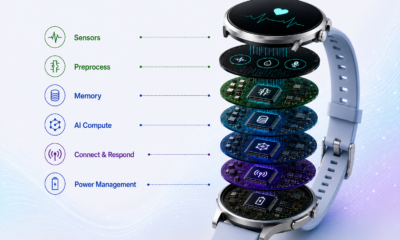
What to Look for in Ultra-Low Power Edge AI Chips
Wearables are becoming smarter, but their batteries aren’t increasing in size proportionally. From health monitoring and activity recognition to always-on voice and emerging AI assistants, wearable devices are increasingly expected to sense,...

Breathing New Life into Pulmonary Medicine
Artificial Intelligence (AI) is changing every industry on the planet. Healthcare is just one example of technology disrupting and improving a market sector. Pulmonary medicine, for example, is changing drastically thanks to AI and IoT, with...

Dual-Mode Bluetooth Audio: Supporting Classic Audio and LE Audio in One Design
Headphones are among the most familiar Bluetooth® products. Whether listening to music on a phone or joining a call on a laptop, people expect them to connect and function. Delivering that familiar experience while introducing new audio capabilities...