
apollo4lite back mobile
apollo4lite back desktopapollo4lite front desktop

Apollo4 Lite

Compact Healthcare Intelligence

apollo4lite front mobile

Purpose-built for diverse edge AI applications, especially for digital health devices, the latest Apollo SoC is poised to help propel the rapid adoption of remote patient or therapeutic monitoring, offering an encouraging prognosis for users and healthcare providers. Apollo4 Lite pairs a 32-bit Arm® Cortex®-M4 processor with turboSPOT® acceleration up to 192MHz, up to 2MB of MRAM, and PSA-L1 certified security, giving developers a flexible, ultra-low-power foundation for smartwatches, fitness trackers, and connected health wearables.

Take Charge of Your Life

01

A Shot in the “Arm”

Apollo4 Lite includes a 32-bit Arm® Cortex®-M4 core with Floating Point Unit and features a fully integrated audio subsystem and interface to cellular and Wi-Fi® radios.

02

Power & Convenience

Embedded with MRAM, SRAM, ultra-low power processors, solid software stacks, and up to 192 MHz operating frequency with turboSPOT®, Apollo4 Lite offers developers optimum flexibility.

03

Purpose-Built SoC

Created to serve as either an application processor or coprocessor, Apollo4 Lite is engineered for edge devices.

04

Improved Health Within Reach

Apollo4 Lite injects the health sector with bold graphics, state-of-the-art tracking, battery life, and affordability.

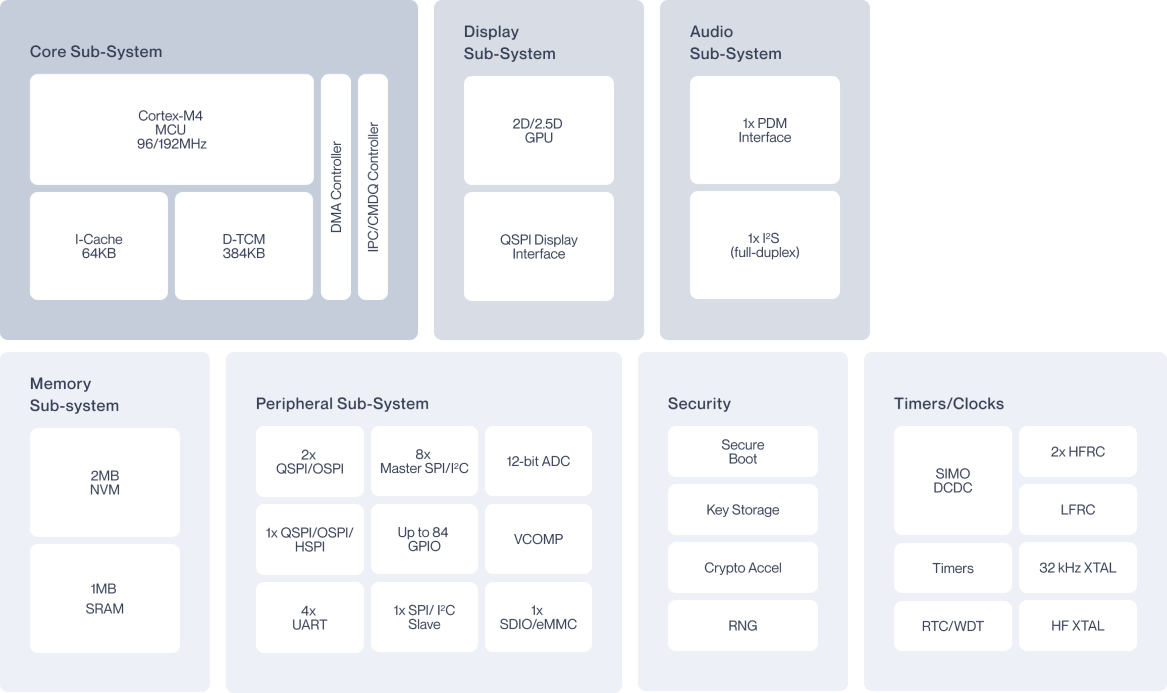
Block Diagram Power Apollo4 Lite

Block Diagram for the Ultra Low Power Apollo4 Lite 1

Specifications

Ultra-Low Supply Current

  • 4 µA/MHz executing from MRAM (with cache)
  • Low power and deep sleep mode selectable levels of RAM/cache retention

High-Performance Arm® Cortex®-M4 Processor with FPU

  • Up to 192 MHz clock frequency
  • Memory protection unit (MPU)
  • Secure Boot
  • PSA-L1 certified

Ultra-Low Power Memory

  • Up to 2MB of non-volatile MRAM for code/data
  • Up to 1.4MB of low power SRAM for code/data

Ultra-Low Power Interface for On- and Off-Chip Sensors

  • 12-bit ADC, 11 selectable input channels
  • Up to 2.8 MS/s sampling rate
  • Temperature sensor with ±3°C accuracy

Ultra-low Power Flexible Serial Peripherals

  • 2x 2/4/8-bit SPI master interface
  • 1x 2/4/8/16-bit SPI master interface
  • 8x I2C/SPI Masters for peripheral communication
  • 1x SPI Slave for host communications
  • 4x UART modules with flow control
  • 1x SDIO (SD3.0)/1x eMMC (v4.51)

Display

  • Up to 500 x 500 resolution
  • Frame buffer decompression

Graphics

  • 2D/2.5D graphics accelerator
  • Texture and frame buffer compression
  • Dithering and hardware anti-aliasing

Audio Processing

  • 1x stereo digital microphone
  • 1x full-duplex I2S ports

Rich Set of Clock Sources

  • 16-52 MHz and 32.768 kHz Crystal XTAL oscillators
  • 1 kHz Low Frequency RC (LFRC) oscillator
  • 2x High Frequency RC (HFRC) oscillator – 192/384 MHz

Power Management

  • Operating range: 1.71-2.2 V, –20°C to 60°C
  • SIMO Buck
  • Multiple I/O voltages

Applications

  • Smart watches/bands
  • Wireless sensors and IoT
  • Activity and fitness monitors
  • Children’s watches
  • Digital health devices
  • Animal trackers
  • Motion and tracking devices
  • Alarms and security system
  • Far-field voice remotes
  • Predictive maintenance
  • Smart home

Package Options

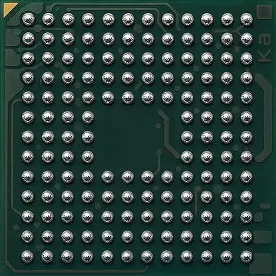
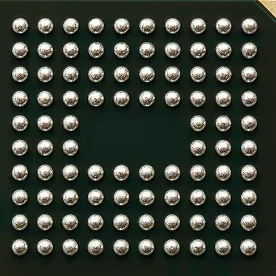
  • 5mm x 5mm, 146-pin BGA with 84 GPIO

Ordering Information

  • AMAP42KL-KBR
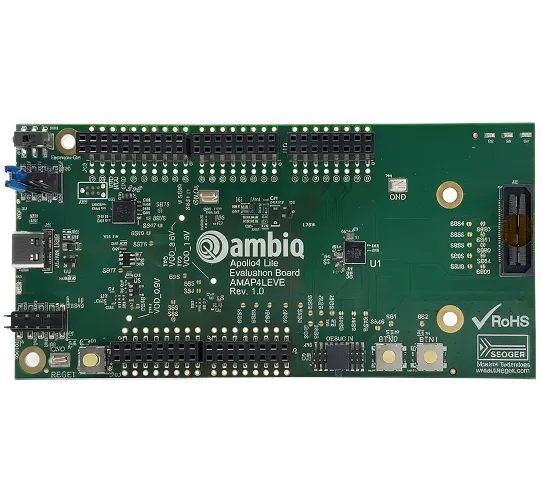
  • AMAP4LEVB (EVB)

Design Resources

Additional Documentation

  • Set favorites
  • Get update notifications
  • Use search filters

Frequently Asked Questions (FAQ)

  • The Apollo4 Lite is an ultra-low-power system-on-chip (SoC) designed for battery-powered edge devices, including digital health applications. It combines a 32-bit Arm® Cortex®-M4 processor operating at up to 192 MHz with integrated graphics, audio processing, and interfaces for external cellular and Wi-Fi® radios. It can serve as either an application processor or coprocessor.

  • The Apollo4 Lite features a 32-bit Arm® Cortex®-M4 processor with a floating-point unit (FPU) and Memory Protection Unit (MPU), operating at up to 192 MHz. Ambiq’s turboSPOT® technology enables dynamic performance scaling for demanding endpoint workloads.

  • Ambiq’s turboSPOT® technology enables the Apollo4 Lite to scale processing performance up to 192 MHz while maintaining ultra-low-power operation. The SoC consumes 4 µA/MHz when executing from MRAM with cache, helping battery-powered devices balance processing performance and energy consumption.

  • Yes. The Apollo4 Lite is PSA Certified Level 1 and includes Secure Boot and a Memory Protection Unit (MPU) to help protect connected endpoint applications. 

  • The Apollo4 Lite provides up to 2 MB of non-volatile MRAM for code and data and up to 1.4 MB of low-power SRAM for code and data. 

  • The Apollo4 Lite features a 2D/2.5D graphics accelerator with texture and frame buffer compression, dithering, and hardware anti-aliasing. It supports display resolutions up to 500 × 500 pixels with frame buffer decompression. 

  • The Apollo4 Lite includes an integrated audio subsystem with one stereo digital microphone interface and one full-duplex I2S port, supporting audio processing in battery-powered endpoint devices.

  • The Apollo4 Lite is designed for smartwatches and fitness bands, wireless sensors and IoT devices, activity and fitness monitors, children’s watches, digital health devices, animal trackers, motion and tracking devices, alarms and security systems, far-field voice remotes, predictive maintenance, and smart home applications.

  • The Apollo4 Lite and Apollo4 Blue Lite both feature Arm® Cortex®-M4 processing up to 192 MHz, up to 2 MB of non-volatile MRAM, up to 1.4 MB of low-power SRAM, and 2D/2.5D graphics acceleration. Apollo4 Blue Lite adds an integrated Bluetooth® Low Energy 5.4 radio with Angle of Arrival (AoA) and Angle of Departure (AoD) support for Bluetooth-connected endpoint devices.

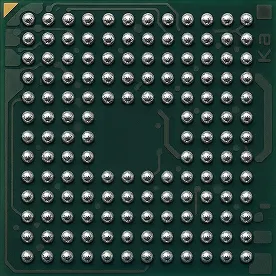
  • The Apollo4 Lite is available in a 5 × 5 mm, 146-pin BGA package with 84 GPIO. The Apollo4 Lite SoC ordering part number is AMAP42KL-KBR.

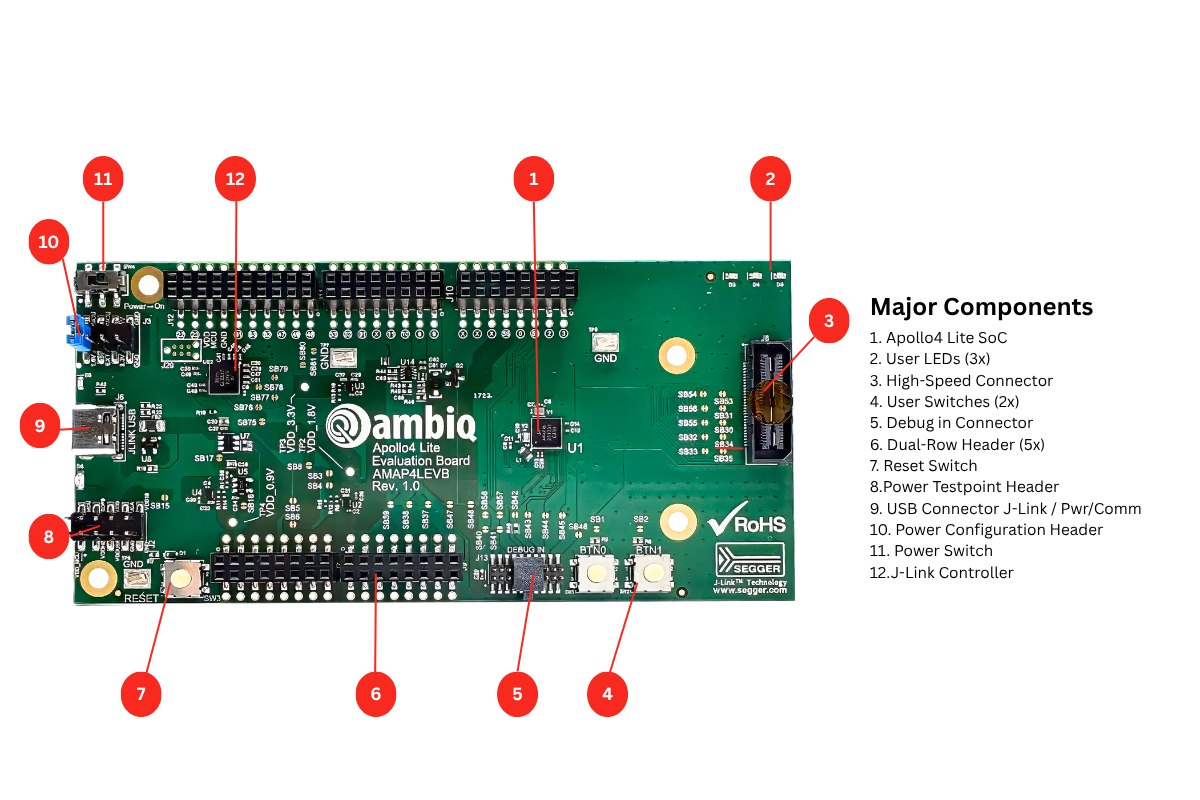
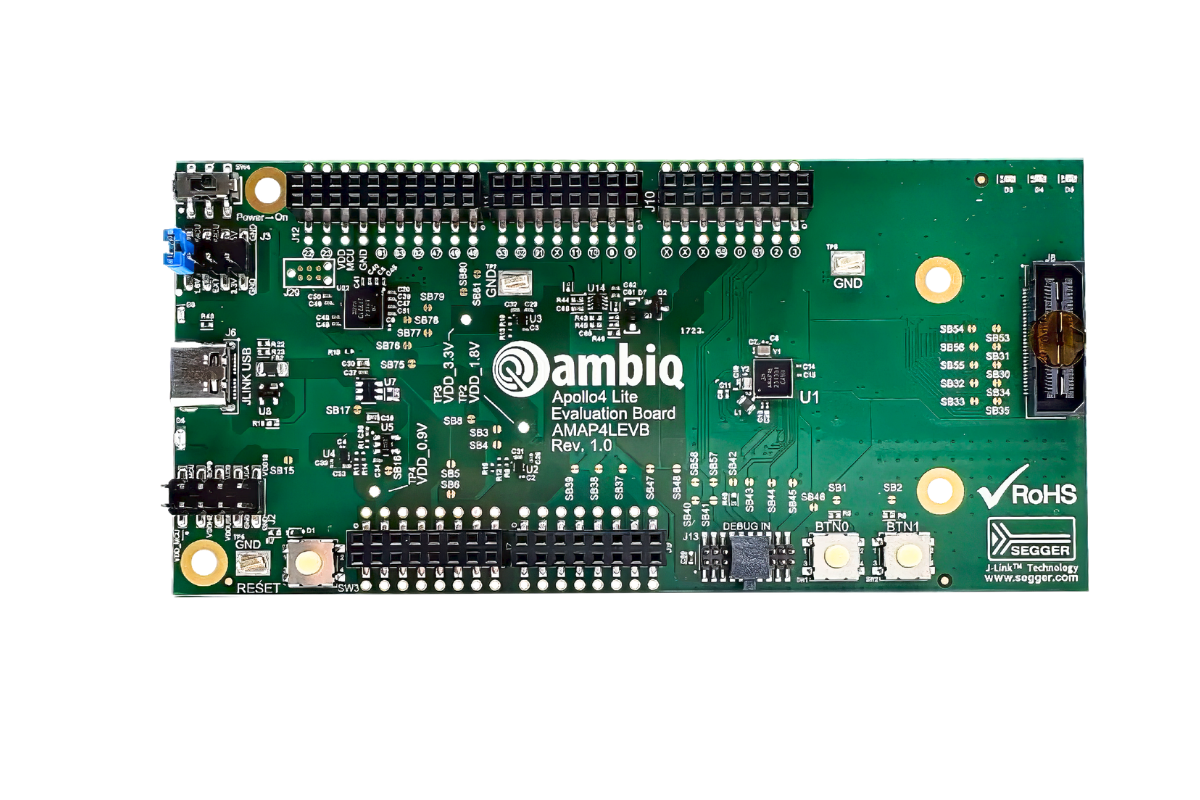
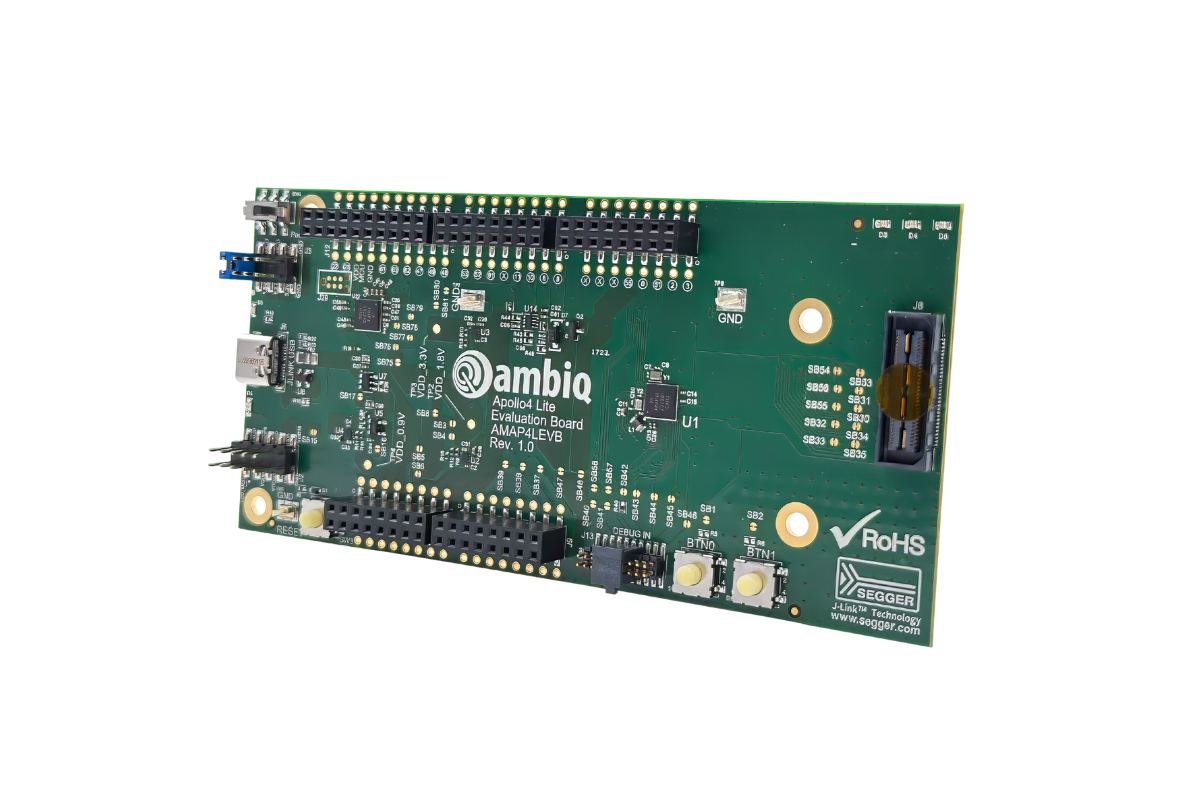
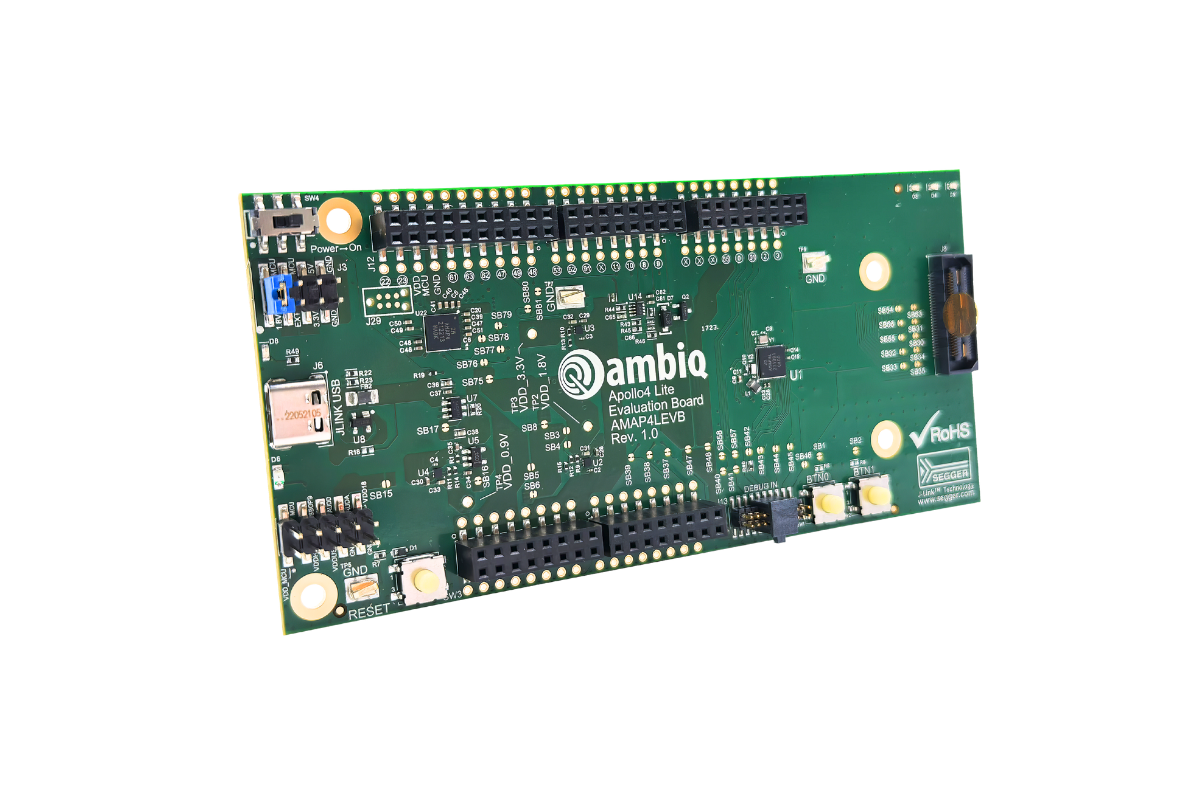
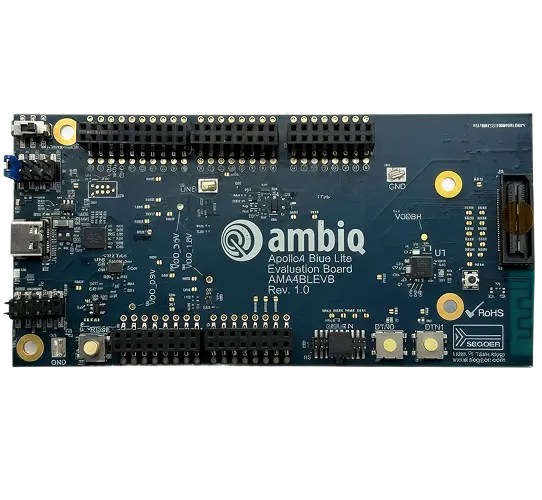
  • Yes. Ambiq offers the AMAP4LEVB evaluation board for Apollo4 Lite prototyping, evaluation, and application development. 

Preparing to download