微处理器是将增强的智能和功能与极小的空间和功率需求相结合的典范。它使我们每天依赖的物联网(IoT)设备成为可能。过去,基础级微处理器只能进行文本编辑、快速计算和互联网通信,而如今,微处理器提供了从声控智能家居设备到可穿戴健康追踪器等各种可能性。
微处理器的历史
The microprocessor was first developed in line with Large-Scale Integration (LSI) in the 1970s. At this time, tiny 5mm silicon chips, complete with thousands of components, were introduced to the technology market. As a result, the Intel® 4004 microprocessor was developed and released in 1971. In the 1980s, Very-Large-Scale Integration (VLSI) led to an even higher circuit density for microprocessors. By the 2010s, the same chips were holding millions of components, revolutionizing the possibilities for smart devices.
第一台微处理器
英特尔 4004 最初只是间接地改变了计算机的面貌。它克服了当时阻碍技术进步的许多限制。当费德里科-法金开始规划英特尔 4004 时,人们最初认为它几乎不可能实现。它的革命性特点包括
- 5 毫米芯片上有 2300 个随机逻辑晶体管
- 速度是传统 CPU 的五倍
- 两倍的电路密度
- 体积小巧
- 低功耗
- 便携式 发热较少
英特尔 4004 最初被设计为四芯片系列中的 CPU,用于新系列的数字计算器;但当它的真正潜力被发掘出来后,英特尔公司授权它用于非计算器设备。英特尔 4004 微处理器最初是作为 Busicom 计算器的一部分,后来成为 Intellec 4 和 Intellec 8 计算机的组成部分。几年后,第一款由微处理器控制的弹球游戏诞生了。经过用户反馈和进一步开发,微处理器经历了一系列迭代,直到 8 位英特尔 8080 的发明,才拉开了个人电脑发展的序幕。
微处理器发生了哪些变化?

微处理器刚开发出来时,对大型机和微型机的发展影响甚微。即使在个人电脑问世之后,与当今丰富多彩的数字生活方式相比,微处理器的用途也相对较少。
随着微处理器经历了 4 位、8 位、16 位、32 位和 64 位的演变,其功能也在不断发展。引脚封装、能效、速度和数字化 RAM 的升级使它们适用于市场上更多的用途,从任天堂®游戏机和激光打印机,到台式机、笔记本电脑,最终到我们现在使用的众所周知的操作系统。
如今,微处理器的功能几乎无穷无尽,Ambiq® 开发的新产品不断超越人们的期望。大多数物联网设备都由电池供电,具有移动性和高性能,因此微处理器需要进行调整,以更高效地运行,同时降低功耗。自 1971 年首次开发微处理器以来,用户配置文件以及优先级已完全改变;现在的重点是:
- 能源效率
- 更快的发展
- 增强图形
- 额外安全
- 更快的计算速度
At the heart of the microprocessors produced at Ambiq is SPOT®, or Sub-threshold Power Optimized Technology, which is a proprietary platform that is redefining energy efficiency by offering before unseen low power potential. By reducing the total system power consumption three to five times lower than conventional circuit design, SPOT enables the possibility of enabling intelligence on any battery-powered edge device.

现代微处理器
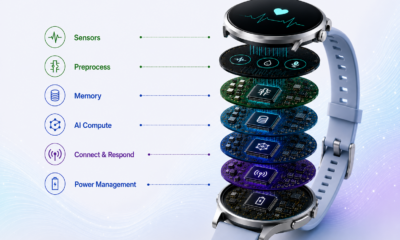
With the rise of smartwatches, fitness bands, far-field voice remotes, and predictive health devices, Ambiq is working on SoCs (system on chips) to cater to these advanced and varied modern needs. The Apollo4 SoC has been purpose-built for exactly these instances. It can handle complex algorithms and neural networks to store large amounts of data and maintain smooth graphics. The Apollo4 family of chips uses the SPOT platform to offer a complete hardware and software solution, creating a new standard for performance that doesn’t drain the battery life of IoT devices.
功能包括
- 超低功耗睡眠模式
- 始终在线的音频和降噪算法
- 2/2.5D 图形加速器和 32 位色彩支持
- 使用 AmbiqSuite SDK 进行开发
- 低功耗通信端口secureSPOT®技术
The Apollo4 Blue SoC also offers faster, more reliable Bluetooth® connectivity.
Ambiq 如何提供帮助
Ambiq 所提供的产品建立在微处理器最初具有革命性意义的关键原则基础之上:即在降低功耗和资源需求的同时扩大可能性。在此过程中,Ambiq 回应了当前市场的优先事项,并开发出引领潮流的微处理器,实现了更快的技术进步,并为用户提供了他们一直要求的功能。Ambiq 的超低功耗解决方案,包括 SPOT 和 Apollo4 系列 SoC,降低了边缘人工智能的功耗,使其成为全球数十亿电池供电的无线物联网设备的可能。Ambiq 解决方案将卓越的人工智能优势带给每个人。