The Future of Intelligent Leak Detection Systems: Why Edge AI Is Moving to the Sensor

情报边缘博客
    The Future of Intelligent Ambiq Leak Detection Systems Why Edge AI Is Moving to the Sensor Blog KV
    The Future of Intelligent Leak Detection Systems: Why Edge AI Is Moving to the Sensor 3

    The leak detection industry is evolving. 

    For years, monitoring systems focused primarily on collecting and transmitting data. Sensors detected moisture, measured environmental conditions, and generated alerts when predefined thresholds were exceeded. 

    That model helped improve visibility, but visibility alone is no longer enough. 

    Customers increasingly expect monitoring systems to identify problems earlier, reduce false alarms, extend battery life, and provide actionable insights rather than raw data. Meeting those expectations requires a new level of intelligence at the edge. 

    As a result, the next generation of edge AI for intelligent leak detection systems is shifting from sensing and reporting to sensing, understanding, and predicting. 

    Why More Data Is Not the Answer 

    Modern monitoring deployments generate enormous amounts of information. 

    Moisture sensors, environmental sensors, vibration sensors, and equipment monitors continuously collect data about operating conditions. Yet the overwhelming majority of those measurements simply confirm that everything is functioning normally. 

    The real challenge is identifying the small number of signals that indicate something is beginning to change. 

    Historically, monitoring systems followed a familiar architecture: 

    Sense → Transmit → Analyze → Respond 

    As deployments scale, this approach becomes increasingly inefficient. Transmitting large volumes of sensor data consumes energy, increases communication costs, and places greater reliance on cloud infrastructure. 

    More importantly, it delays the point at which data becomes actionable. 

    Edge AI introduces a different model. 

    By performing anomaly detection and decision-making directly on the device, intelligent sensors can determine what matters before information ever leaves the endpoint. 

    The result is a more efficient architecture: 

    Sense → Understand → Decide → Communicate 

    Rather than transmitting everything, devices communicate only meaningful events. 

    From Thresholds to Intelligence 

    Traditional leak detection systems are often designed around fixed thresholds. Water is detected, an alert is generated, and operators respond. 

    But many failures begin long before water is visibly present. 

    Subtle environmental changes, shifting moisture patterns, and abnormal operating conditions frequently emerge before a leak becomes obvious. These signals can be difficult to detect using conventional rules-based approaches. 

    Edge AI enables a different strategy. 

    By learning what normal conditions look like, monitoring systems can identify anomalies and recognize patterns that may indicate developing issues. Instead of waiting for a threshold to be crossed, intelligent devices can identify changes earlier and provide more context around what is happening. 

    For developers of leak detection solutions, this creates opportunities to improve detection accuracy, reduce nuisance alerts, and deliver greater value to customers. 

    The Power Constraint 

    While the benefits of Edge AI are compelling, implementing intelligence at the sensor introduces a significant engineering challenge. 

    Power. 

    Many leak detection devices operate on batteries and are deployed in locations where frequent maintenance is impractical. Customers may expect devices to remain operational for years while continuously monitoring conditions. 

    At the same time, running machine learning algorithms locally increases computational requirements. 

    For Edge AI to scale across large deployments, intelligent monitoring must operate within extremely constrained energy budgets. 

    This challenge is becoming increasingly important as device manufacturers seek to add more sophisticated analytics, anomaly detection capabilities, and always-on awareness to their products. 

    The Future of Intelligent Ambiq Leak Detection Systems Why Edge AI Is Moving to the Sensor Blog KV2
    The Future of Intelligent Leak Detection Systems: Why Edge AI Is Moving to the Sensor 4

    Why Ultra-Low-Power Edge AI Matters 

    Recent advances in AI, sensing technologies, and semiconductor design have made it possible to bring meaningful intelligence directly to battery-powered devices. 

    Tasks that once required cloud infrastructure can now run at the endpoint, enabling sensors to analyze data locally and respond in real time. 

    The ability to do so efficiently is what will define the next generation of intelligent sensing products. 

    This is precisely the challenge Ambiq’s ultra-low-power System-on-Chips (SoCs) were designed to address. 

    Built on Ambiq’s proprietary Subthreshold Power Optimized Technology (SPOT®), devices such as the Apollo510 enable always-on sensing, signal processing, and on-device AI inference while operating within extremely constrained power budgets. 

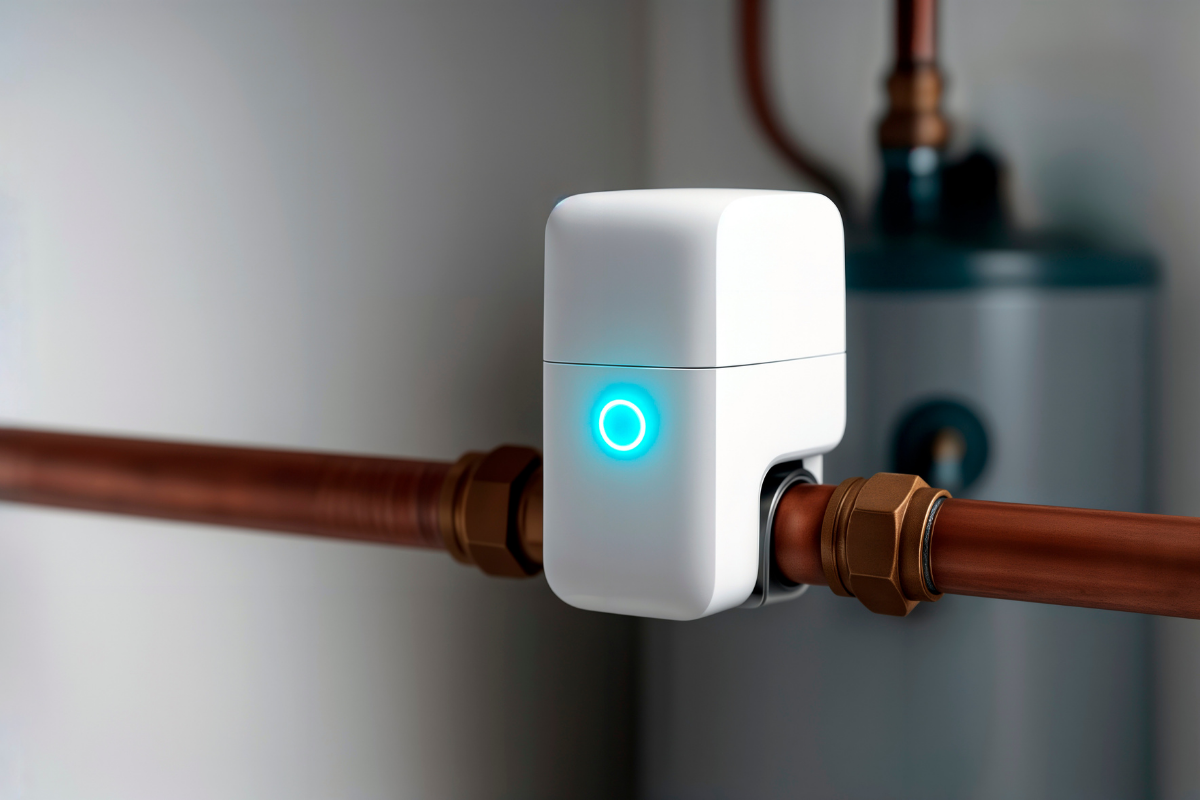
    For developers building leak detection systems and other intelligent monitoring solutions, this enables a new class of battery-powered devices capable of continuously observing conditions, analyzing data locally, and communicating only when meaningful events occur. 

    Reducing wireless transmissions not only conserves energy but also improves scalability, responsiveness, and operational efficiency. 

    The Next Generation of Monitoring Systems 

    The future of leak detection will not be defined by the number of sensors deployed. 

    It will be defined by the intelligence embedded within them. 

    As Edge AI continues to mature, monitoring systems will become increasingly capable of recognizing patterns that precede failures, identifying anomalies earlier, and helping customers act before damage occurs. 

    The companies that lead the next generation of intelligent sensing will be those that can combine accurate detection, long battery life, and real-time decision-making in a single platform. 

    Making that possible requires intelligence at the sensor. 

    And increasingly, it requires ultra-low-power Edge AI. 

    Reference 

    1 NAIOP, Managing Water Damage Risk Involves Planning, Diligence, citing Zurich North America research: https://www.naiop.org/research-and-publications/magazine/2022/winter-2022/development-ownership/managing-water-damage-risk-involves-planning-diligence/ 

      订阅新闻通讯

        准备下载