Edge AI is learning to detect the warning signs of machine failure through vibration analysis of industrial bearings in a more practical, scalable way.

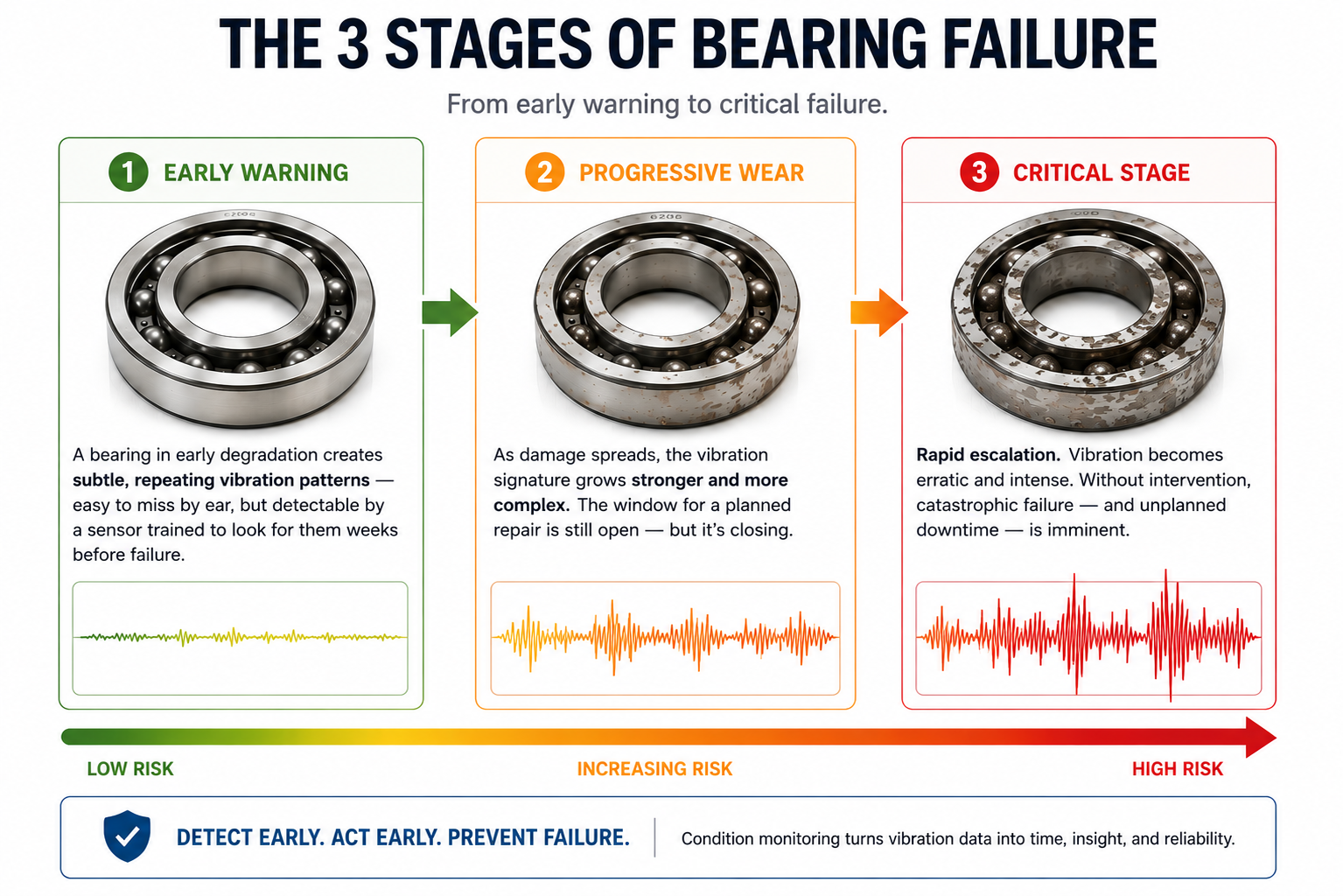
An industrial machine bearing does not fail all at once. It will indicate signs through tiny vibrations and subtle changes that accumulate over days or weeks before anything visible goes wrong. For generations, catching those early warnings meant sending a skilled technician with a handheld analyzer, reading the data by hand, and making a judgment call.
While this method still works, it is largely inefficient, expensive, infrequent, and not scalable across an entire factory floor.
Edge AI changes that dynamic. Instead of shipping vibration data to a server somewhere for analysis, a tiny chip on the sensor itself listens, learns, and decides in real time, without a network connection, running on a battery that can last for years. The machine, in effect, learns to understand its own health.
Why Bearings Matter in Industrial Machinery
Bearings are the unsung workhorses of industrial machinery, enabling motors, pumps, conveyor belts, and compressors to run smoothly, yet they’re also among the most common failure points. When a bearing begins to degrade, it creates patterns in the machine’s vibration. Those patterns are invisible to the naked eye and inaudible amid the noise of a factory floor, but they’re there, consistent, measurable, and detectable long before the bearing actually breaks.
Catching degradation early is the difference between scheduling a planned replacement during a maintenance window and facing an emergency shutdown at the worst possible moment. The cost of lost production, emergency labor, and downstream delays can run into hundreds of thousands of dollars for a single event.

The Problem with Cloud Infrastructure in Industrial Settings
The intuitive solution seems simple: place a sensor on every bearing, connect them all to the internet, and run the analysis in the cloud. Many companies have tried exactly this and run into the same problems.
Industrial facilities are not conducive to wireless connectivity. Thick steel walls, electrical interference from heavy motors, and remote plant locations all conspire to undermine reliable network coverage. Battery-powered sensors that transmit data continuously drain their batteries in weeks, not years, making large-scale deployments impractical to maintain. In older facilities, the networking infrastructure would require costly upgrades to support hundreds of simultaneous sensor streams.
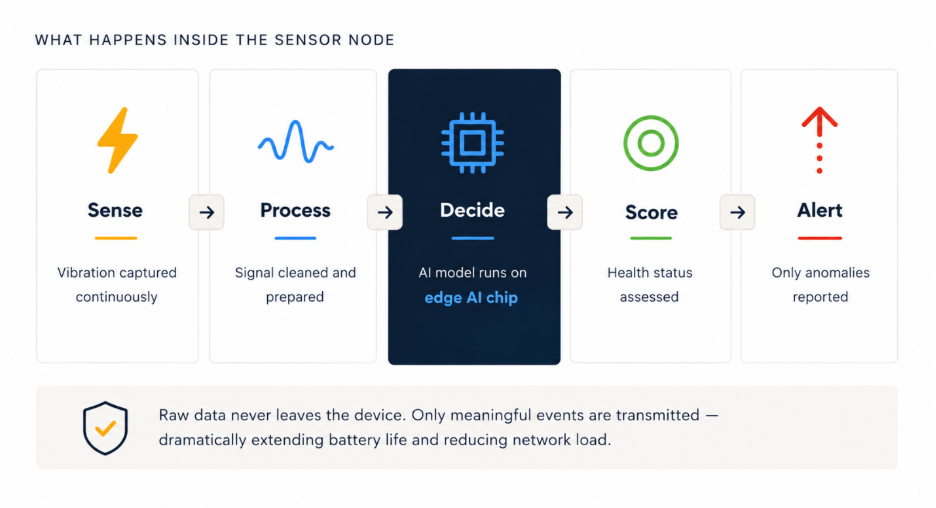
The more efficient solution is a sensor that thinks for itself. Instead of streaming raw data continuously, it makes decisions on-device and transmits only when there’s something worth reporting, using low-power radio protocols that work where constant cloud connectivity doesn’t, and drawing so little power that a single battery can last for months to years.
What Edge AI Deployment Looks Like on a Sensor
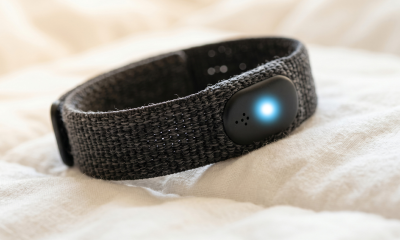
A modern edge vibration sensor can be as small as a matchbox. It sticks to the housing of a motor or pump, and from that moment on, it simply watches. The vibration it picks up is processed entirely on the chip, only sending alerts when it detects an anomaly.

The AI model at the heart of this process has been trained to recognize the difference between a healthy and a degrading vibration signature and to classify the type and severity of the problem it detects.
It runs in a fraction of a second, draws almost no power, and sleeps between cycles. When everything looks normal, the sensor stays quiet. When something changes, it sends an alert that might read: "Pump bearing on machine #32 shows early signs of outer race wear. Replacement recommended within 30 days."
This provides proactive and actionable information without the need for manual check-ups or analysis.
Other Use Cases for Predictive Maintenance
Industrial bearings are a starting point, but the underlying approach applies to a wide range of industrial equipment:
- Pump cavitation — a condition where air bubbles form inside the pump and gradually destroy it — in ways that create distinctive vibration changes.
- Gearbox wear — worn teeth development that alters the sound and feel of the mesh between gears.
- Motor Misalignment — motors running out of alignment vibrate asymmetrically.
In each case, the problem leaves a signature that a trained model can learn to recognize and report. Use cases also extend beyond rotating machinery.
Bridges and industrial structures flex and resonate differently as they age or sustain damage; pipelines develop stress points; even a building’s structural health can be monitored through the pattern of its ambient vibrations.
Any physical system that changes its mechanical behavior over time is a candidate for this kind of continuous,
Intelligence That Blends In
The best industrial monitoring systems are the ones you don’t notice until they prevent a problem. Factories that deploy this kind of ambient intelligence don’t look any different from the outside. The motors still hum, the conveyors still run, and the maintenance team still goes about its work.
The difference is that, in the background, every machine quietly analyzes its health and sends actionable alerts before any issues arise.
Support for over-the-air updates can further refine hardware without anyone physically touching it. A model deployed today can be better calibrated for a specific motor type, load profile, or operating environment six months from now and pushed silently to every sensor on the network. This ability to tailor and update models in the field, without service visits, is what makes this kind of system practical at scale.
How Ambiq Contributes to Industrial Edge AI Monitoring
The reason AI on a battery-powered sensor wasn’t practical until recently is simple: AI inference requires significant power and compute, both of which are especially limited at the edge. Ambiq’s SPOT® (Subthreshold Power Optimized Technology) platform can fundamentally change that constraint.
Rather than traditional circuit designs, Ambiq chips operate at near- and subthreshold voltages, resulting in a quadratic improvement in energy efficiency for battery-powered devices, enabling them to run advanced edge AI models without draining battery life.
In early 2026, Ambiq announced a partnership with Ronds, a provider of predictive maintenance solutions for heavy industrial monitoring equipment used in petrochemical plants, coal processing facilities, and chemical operations. The results include a large-scale deployment of over 400K solutions, advanced vibration anomaly detection, integration of natural language diagnostics with generative AI, and multi-year battery life, enabling maintenance-free operations in dense industrial settings.
Learn more about how Ambiq can be applied to industrial applications here.