Even the most enthusiastic advocates of technology can feel uneasy when the conversation turns to implants. It’s one thing to wear a watch that tracks your heart rate; it’s quite another to have a device surgically placed inside your body.
And yet, implantable technology is already one of the most powerful tools we have for improving health and extending life. In fact, it’s not new—it predates modern computing.
Pacemakers have been in use since the 1950s, long before personal computers. Today, cochlear implants restore hearing, and insulin pumps help manage diabetes. These aren’t futuristic ideas—they’re proven technologies that have already transformed millions of lives.
Implants aren’t new.
What’s new is how intelligent they’re becoming.
What Makes an Implant “Smart”?
Modern smart implants go beyond performing a single function. They are bio-integrated systems capable of monitoring, analyzing, and responding to the body in real time.
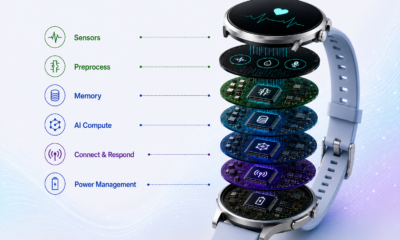
This isn’t science fiction or a step toward “cyborgs.” Instead, it’s a practical evolution: minimally intrusive devices enhanced by ultra-low-power system-on-chip (SoC) technology that enables continuous, personalized care.
Real-World Applications by Smart Implants
Smart implants are already being used today—and their capabilities are expanding quickly. Here are a few key examples.
Cardiac Devices
Cardiac implants are among the most advanced and widely used smart medical devices. Today’s pacemakers and implantable defibrillators don’t just regulate heart rhythms—they can adapt in real time to a patient’s condition. Outside the body, automated external defibrillators (AEDs) are now common in workplaces and public spaces, enabling bystanders to respond to cardiac emergencies before medical professionals arrive.
Inside the body, however, the challenge is far greater.
Implantable cardiac devices must:
- Detect extremely faint electrical signals from the heart
- Process those signals with high accuracy
- Operate continuously for years on very limited power
Because battery replacement requires surgery, every milliwatt matters.

Orthopedic Solutions
Smart orthopedic implants are transforming recovery after joint replacement.
These devices can track key metrics such as step count, range of motion, cadence, and gait symmetry—giving clinicians a clearer, continuous view of patient progress and helping detect complications earlier.
A leading example is the Persona IQ smart knee, developed by Zimmer Biomet and Canary Medical. It doesn’t just replace a joint—it monitors how that joint is performing and how the patient is recovering.
Inside the implant, miniaturized sensors, low-power microcontrollers, and efficient power management systems work together under strict size and energy constraints.
Just as important, modern implants process data locally. Instead of sending raw data continuously, they convert it into meaningful insights on-device. This:
- Reduces wireless communication
- Conserves energy and extends lifespan
- Delivers more actionable information to clinicians
Summarized data is then securely transmitted to external systems, allowing providers to monitor recovery remotely between visits.
Cochlear Implants
Cochlear implants are one of the earliest—and most impactful—examples of smart implants.
Unlike hearing aids, which amplify sound, cochlear implants bypass damaged parts of the ear and directly stimulate the auditory nerve. This enables people with severe-to-profound hearing loss to regain meaningful hearing.
The Challenges — and How Modern Semiconductors Help Solve Them
Despite their promise, smart implants face several challenges.
They must meet strict regulatory standards to ensure safety. They must protect sensitive health data and prevent unauthorized access. Cost remains a barrier for many patients. And perhaps most critically, they must operate reliably for years without requiring additional surgery.
These constraints point to a simple principle: smaller, more efficient, and more reliable is better.
This is where semiconductor innovation plays a central role.
Advances in chip design now enable ultra-compact components that fit inside implantable devices while delivering greater performance with less power. Low-power architectures are especially important, helping extend battery life and reduce the need for replacement procedures.
Emerging energy-harvesting technologies—such as capturing energy from heartbeats or metabolism—may further extend device lifespans.
At the same time, more capable chips allow implants to transform raw biological signals into actionable insights. When combined with AI, these devices can analyze data in real time and make decisions locally—reducing latency and dependence on cloud connectivity.
The result is faster response, greater reliability, and better patient outcomes.
What the Future Looks Like
The next generation of implants is moving toward personalized, predictive care.
Future devices will continuously learn from patient data, build individualized health profiles, and adapt therapy in real time.
At the same time, connected healthcare ecosystems are emerging. Implants will securely communicate with physicians and hospital systems, reducing the need for in-person visits while enabling earlier intervention.
Innovation is also accelerating at the chip level. Neuromorphic and specialized processors are enabling more advanced applications, including next-generation neurostimulators that mimic the brain’s structure and adapt over time.
Behind all of this is a shift in the role of semiconductor companies—from component suppliers to strategic partners in healthcare innovation.
The Implants of Tomorrow Are Arriving Now
Implants aren’t about replacing what makes us human. They’re about helping our bodies function at their best.
As AI drives exponential growth in data and processing needs, collaboration between semiconductor companies and medical device manufacturers will be essential.
Ambiq is one example of this new wave of innovation. Its Subthreshold Power Optimized Technology (SPOT®) platform delivers significant gains in energy efficiency and performance, making it well-suited for next-generation healthcare devices.
Learn why Frost & Sullivan named Ambiq the 2025 Global Semiconductor Solutions for Healthcare Company of the Year.